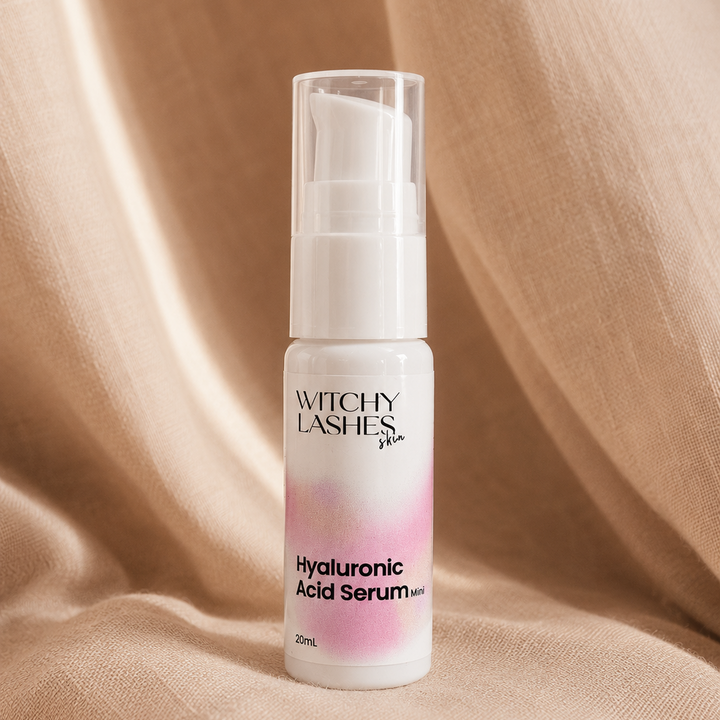


If your skin has started feeling drier in your forties and you cannot quite work out why, you are not imagining it. Your skin is doing less of the water-holding work it used to do on its own, and there is good research on why.
This article walks through what hyaluronic acid actually is, why your skin makes less of it during perimenopause, what the research says about supporting that change from the outside, and how to apply a hyaluronic acid serum in a way that actually works.
What hyaluronic acid actually is
Hyaluronic acid is a naturally occurring molecule found throughout your body. Most of it lives in your skin, with significant amounts also in your joints and connective tissue. It is technically a glycosaminoglycan, a long chain of sugar molecules with a remarkable capacity to bind water.
The often-quoted figure is that hyaluronic acid can bind up to a thousand times its weight in water. This is approximately true, and it is why hyaluronic acid is such a foundational ingredient in skincare. A small amount of it, holding a large amount of water, in the upper layer of your skin, is what supports the appearance of skin that looks plump and feels hydrated.
Your skin produces hyaluronic acid through specialised enzymes in the fibroblast cells of the dermis. The production is regulated by a combination of hormonal signals, age-related factors, and environmental conditions. Oestrogen is one of the key signals that supports this production. As oestrogen declines through perimenopause, production naturally reduces.
This is not a deficiency and it is not your skin doing anything wrong. It is a normal biological change that happens to all women in this life stage. The question is how to support the practical experience of it: skin that feels drier than it used to.

What the research shows about hyaluronic acid in perimenopause
The relationship between oestrogen and skin hyaluronic acid is one of the better-studied areas in dermatological research on the menopause transition.
A 2021 review in Dermatology and Therapy (Lephart and Naftolin, 2021) examined the role of oestrogen across multiple skin functions, including hyaluronic acid production. The review confirmed that endogenous hyaluronic acid synthesis declines measurably through perimenopause and into menopause, with consequences for skin hydration and appearance.
A 2019 paper in the International Journal of Women's Dermatology (Rzepecki et al., 2019) provided a comprehensive review of oestrogen-deficient skin, including the changes to hyaluronic acid production, sebum balance, collagen synthesis, and barrier function that characterise this transition.
A 2022 paper in the Journal of Cosmetic Dermatology (Bravo et al., 2022) reviewed the dermatological clinical uses of topical hyaluronic acid and found consistent evidence that it improves measured skin hydration, supports the appearance of fine lines, and is well tolerated across skin types.
A 2012 paper in Dermato-Endocrinology (Papakonstantinou et al., 2012) examined hyaluronic acid as a key molecule in skin ageing, confirming the close relationship between hyaluronic acid content in skin and the visible changes most prominent in perimenopausal and postmenopausal skin.
The picture across these papers is consistent. Hyaluronic acid production declines in perimenopause. Topical application is well tolerated and measurably supports skin hydration. The Witchy Hyaluronic Acid Serum is the formula we built specifically for this moment: three ingredients, no fragrance, no actives beyond the hyaluronic acid itself.
Why hyaluronic acid serum works, and the damp skin detail
The mechanism of topical hyaluronic acid is simple humectant action. The molecule sits on the surface and in the upper layers of your skin and binds water there. The water it binds comes from two sources: water in the air around you, and water in the deeper layers of your skin.
In most environments, particularly Australian indoor environments with air-conditioning, the air does not have enough humidity to be a reliable water source. Most of the water your hyaluronic acid binds therefore needs to come from somewhere else, and applying it to dry skin can actually draw water out of the deeper skin layers, which is not the direction we want this routine to go.
This is why every hyaluronic acid product worth taking seriously comes with the same instruction: apply to damp skin.
The routine that works is: cleanse, pat dry but leave the skin slightly damp, apply the hyaluronic acid serum within sixty seconds, then seal it in with an oil or moisturiser on top before the surface dries. The hyaluronic acid binds the water sitting on your damp skin from your cleanse, the seal step locks it in, and the upper layer of your skin stays hydrated for hours.
This sounds like a small detail. The difference between applying hyaluronic acid to damp skin and applying it to dry skin is the difference between skin that feels hydrated and comfortable and skin that feels a little tight and confusingly unimpressed with everything you are doing for it.
Research confirms that endogenous hyaluronic acid synthesis declines through perimenopause and into menopause, with measurable consequences for skin hydration and appearance.
Witchy Lashes' three-ingredient hyaluronic acid serum

The Witchy Lashes Hyaluronic Acid Serum is a deliberately minimal formula. There are three ingredients: purified water as the base, plant-based hyaluronic acid as the active, and a touch of natural preservation to ensure the product is stable and safe to use over its shelf life.
There are no essential oils. No fragrance. No actives beyond the hyaluronic acid. No texture enhancers, no silicones, no alcohols that can be drying, no herbal extracts that can sensitise reactive skin. The formula is built to be a very quiet humectant, designed for skin that may have become reactive in perimenopause and does not need extra noise from unnecessary ingredients.
Hyaluronic acid is the foundation. It is the first product most women add to their perimenopause routine, and it needs to work on every skin baseline. Whether your skin is reactive, sensitive, post-inflammatory, recovering from an over-active routine, in the middle of a perimenopausal breakout, or completely calm, the three-ingredient formula is designed not to add unnecessary friction. It simply does its job.

How to use it well
The full perimenopause routine uses the hyaluronic acid serum twice a day, morning and evening, as the first product after cleansing.
Step one: cleanse gently. Use cool to lukewarm water. Skip foaming cleansers if your skin has become reactive. A simple cream or oil-based cleanser is usually the right call for perimenopausal skin.
Step two: pat damp. With a soft towel, pat your face just dry enough that the surface is no longer dripping. The skin should still feel slightly damp to the touch.
Step three: apply within sixty seconds. A few drops of the hyaluronic acid serum, pressed into damp skin. Do not rub. Press and let it absorb.
Step four: wait about thirty seconds. Give the hyaluronic acid time to settle into the upper skin layer.
Step five: seal. This is where the Blue Tansy Calming Facial Oil goes on top in the morning and on calming evenings, or the Retinyl Renewal Oil on retinoid evenings. The oil locks in the water the hyaluronic acid has bound.
Step six: sunscreen, every morning. Mineral sunscreen (zinc oxide, titanium dioxide) is the gentler choice for skin that has become reactive in perimenopause.
What to expect
Many women using a hyaluronic acid serum on damp skin twice a day notice a shift in the comfort of their skin within the first week. The skin feels less tight, less drawn, and slightly plumper to the touch. The visible change in the appearance of fine lines and texture is usually a slower curve, with clearer change at the four to eight week mark.
For perimenopausal skin specifically, the hyaluronic acid serum is often the product that makes the rest of the routine possible. A more hydrated baseline means stronger tolerance for the calming oil on top, and stronger tolerance for the gentle vitamin A on retinoid evenings. Without the hydration step, the rest of the routine is working against a barrier that is more fragile than it should be.
What hyaluronic acid will not do is pretend the years have not happened. It will not refill collagen that has reduced. It will not reverse photoageing. It will not solve perimenopausal acne. What it will do is hold water in the upper layer of your skin, support the appearance of a more hydrated complexion, and provide the foundation that the rest of your routine builds on.
🌿 When to see a GP or dermatologist
Hyaluronic acid is one of the better-tolerated cosmetic ingredients. There are still a few situations where clinical input is the right first step. If you have an active skin condition (eczema flare, rosacea flare, perioral dermatitis, persistent unexplained reactivity), see a GP before adding anything new. If you are using a prescribed skincare regime, check with your prescribing doctor before making changes. If you are pregnant or breastfeeding, hyaluronic acid is generally considered safe, but please discuss your full routine with your GP, obstetrician, or midwife.
For Australian readers: healthdirect.gov.au has plain-English guides on skin conditions, and the Australasian College of Dermatologists A to Z of Skin is the specialist resource. For American readers: the American Academy of Dermatology has equivalent public resources.
A note from Marcha
The hyaluronic acid serum is the product I am most often asked to explain.
The conversation usually starts the same way. A woman in her mid forties writes to say her skin has started feeling drier and she does not know why. She has been using the same moisturiser for years. She has tried adding a richer cream and it has not helped. She is not sure whether to add an oil, change her cleanser, get a humidifier, or just accept it.
The first thing I usually say is: you have not done anything wrong. Your skin has changed in a real, documented way. The hyaluronic acid your skin used to make on its own is reducing, and that is one of the more well-supported changes in the research on this life stage. The good news is that supporting the change is straightforward. The instinct to add a richer cream is going in the right direction but missing the foundation step. The foundation is putting water in first, before sealing it in with anything.
That is why we made the formula the way we did. Three ingredients. No fragrance. No actives. A clean humectant designed to be the foundation step for the women I have been writing to for years.
It is the product I send to my friends who are in this season. If you are reading this and your skin has started feeling drier in your forties, the Hyaluronic Acid Serum on damp skin, twice a day, for two weeks, is where I would tell you to start. See what changes.
Marcha, Founder of Witchy Lashes Skin
Common questions
Does hyaluronic acid help with perimenopause skin?
Yes, and the research is reasonably clear on why. Your skin's own hyaluronic acid production declines through perimenopause as oestrogen reduces (Lephart and Naftolin, 2021). Topical hyaluronic acid binds water in the upper layer of skin and supports the appearance of hydrated, plumper-looking skin (Bravo et al., 2022). It is one of the better-supported single ingredient interventions for the dryness many women experience in perimenopause.
How often should I use hyaluronic acid serum?
Twice a day, morning and evening, as the first product after cleansing. Always applied to damp skin within sixty seconds of cleansing, then sealed with an oil or moisturiser on top. The damp skin step matters more than most people realise. Applying hyaluronic acid to dry skin can actually draw water out of the deeper skin layers rather than putting it in.
Why does hyaluronic acid need to be applied to damp skin?
Hyaluronic acid is a humectant, which means it binds water from wherever water is available. In most Australian indoor environments with air-conditioning, the air does not have enough humidity to be a reliable water source. Applying to damp skin gives the hyaluronic acid water sitting on the surface to bind, which it then holds in the upper skin layer. Without a water source immediately available, it can pull from the deeper layers instead.
Can I use Witchy Hyaluronic Acid Serum with retinol?
Yes, and the combination is specifically designed for it. On retinoid evenings, the routine is hyaluronic acid serum on damp skin first, then a few minutes later the Retinyl Renewal Oil over the top. The hyaluronic acid replaces water in the upper skin layer that the retinoid pathway can sometimes pull out. The oil seals it in and delivers the retinyl palmitate. This is the routine we recommend for everyone using vitamin A alongside hyaluronic acid in perimenopause.
How long until I see results from hyaluronic acid serum?
Most women notice a shift in the comfort of their skin within the first week of using hyaluronic acid serum correctly: on damp skin, twice a day, sealed with an oil or moisturiser. The skin feels less tight, less drawn, and slightly plumper to the touch. Visible change in the appearance of fine lines and texture is usually a slower curve, with clearer change at the four to eight week mark.
The perimenopause three
The three products referenced through this article, as a complete perimenopause skincare routine.
-
 Hyaluronic Acid Serum
-
 Blue Tansy Calming Facial Oil
-
 Retinyl Renewal Oil

