

How stress shows up on skin
Most women notice the look before the feeling.
The under-eye area looks darker or puffier than it did yesterday. The cheeks look flushed or a little grey. Fine lines around the eyes catch the light differently. Your face looks dry and oily at the same time. You look in the mirror and think: "I look like I have had a week."
If you have been running hard for a while, you may also notice:
- Breakouts in unusual places, such as the jawline, temples or cheeks.
- Skin reacting to products you have used for years.
- Tightness that does not settle with your usual moisturiser.
- Redness that appears in the afternoon, especially after a hot shower, wine, spicy food or stress.
- An "angry" look that is hard to point to exactly.
- Eczema-prone areas flaring, including behind the knees, inside the elbows or on the face.
- Cold sores or other old patterns reappearing.
These are not vanity observations. They are real signals from a body under load.
What is actually happening underneath
The link between stress and skin is well established. When cortisol stays elevated for too long, several things can happen at once.
Skin barrier function can decline. Chronic stress can affect the skin's lipid production, which is part of how the skin holds water. The result is faster water loss and a surface that feels less resilient.
Inflammation can increase. Stress and inflammatory signalling often travel together. This can show up as redness, reactivity or breakouts.
Sebum production can become irregular. Some women produce more oil under stress. Some produce less. Many seem to do both in different areas at once, which is why the skin can feel tight but look shiny.
Sleep quality drops. Skin does a lot of its repair work overnight. When sleep is short or broken, the repair window is shorter too. You may see the effect by the end of the week.
Wound healing slows. Blemishes, cuts, irritation and post-procedure recovery can take longer when your body is stretched.
Vascular reactivity increases. Blood vessels in the face may dilate more readily, which can mean more flushing in response to things that did not bother you before.
None of this means your skin is failing. It means your skin is part of your body, and your body is under load.
Sometimes the mirror at 7 a.m. is the first honest little report card from the rest of your body.
The thing that actually helps
It would be very convenient if there were a serum for burnout. There is not.
The things that genuinely help stressed skin are the same things that help a stressed body: sleep, water, sunlight, time outside, movement that does not punish you, lower cortisol where you can find it, less screen noise, connection, and time.
I know that is not the usual skincare answer. It is the honest one.
Skincare can support the skin while the rest of you catches up, but it cannot replace what your nervous system is asking for. The most useful routine during a stressed season is usually the simplest calming routine: gentle cleanser, humectant on damp skin, calming oil over the top, sunscreen in the morning. That is enough.
It helps replace some of the water and comfort your skin is losing, and it avoids adding active ingredients that ask your skin to do more work when it is already busy.
A skincare routine for stressed skin
Morning
- Rinse with cool to lukewarm water, or use a gentle cleanser. Skip foaming cleansers when your skin feels reactive.
- Pat your skin damp.
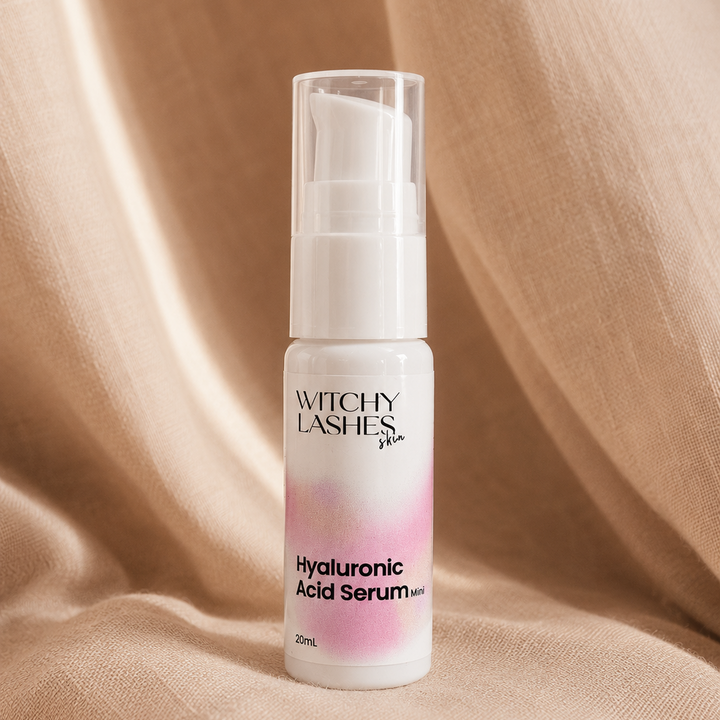
- Within sixty seconds, press in a few drops of Hyaluronic Acid Serum on damp skin. Hyaluronic acid is a humectant that binds water in the upper layer of skin and has been shown to improve hydration in topical applications (Bukhari et al., 2023). No fragrance, no active ingredients, no essential oils.
- Wait about thirty seconds.
- Press in two to three drops of Blue Tansy Calming Facial Oil. The oil contains chamazulene, a compound with documented antioxidant effects in laboratory studies (Slon et al., 2024).
- Apply mineral sunscreen as your final step.
Evening
- Cleanse gently.
- Pat damp.
- Apply serum within sixty seconds.
- Wait about thirty seconds.
- Press in three to four drops of facial oil.
- Get to bed earlier than feels possible, if you can.
That is the whole routine. If you would like both products in one pairing, the Renewal Ritual brings them together.
What to pause while your skin is reactive from stress: retinol and retinoids; strong vitamin C serums; AHAs, BHAs, exfoliating cleansers and exfoliating toners; clay masks and detox-style treatments; anything new. This pause is not forever. It is a calm-down while your skin catches up with the rest of you.

The lifestyle support that does the heavy lifting
This is not the part most skincare articles focus on, but it is the part that matters most.
Sleep. If you can shift one thing, start here. Even ninety extra minutes across a week can show on the face. You do not need to fix your whole life at once. One earlier bedtime helps.
Water. A glass by the bed. One with breakfast. One before lunch. Keep it boring and easy.
Sunlight in the morning. Ten minutes of natural light in the first hour after waking helps support your daily rhythm and sleep that night. A walk, coffee outside, breakfast near a window.
Time outside. Even fifteen minutes. Trees, sky, ground, fresh air. Your nervous system responds to it.
Movement, but gently. A long walk may help stressed skin more than a punishing workout. High-intensity exercise can raise cortisol short-term. Walks tend to bring the system down.
Lower the news and notification load. Cortisol responds to perceived threat. If your phone is feeding you threat all day, your skin is not separate from that.
Connection. Coffee with someone you love. A call to your mum, sister or oldest friend. Real connection lowers stress in a way no skincare product can imitate.
These are not fluffy add-ons. They are the actual conditions that help stressed skin settle.
When to see a GP
Most stress-related skin reactivity settles within a week or two when the routine is calmer and the body gets a little more support. Sometimes it is not stress alone. See a GP if reactivity continues for more than four weeks despite better sleep and a gentler routine; if you have persistent redness especially in distinct patches; visible blood vessels, flushing in response to specific triggers, or facial swelling (possible signs of rosacea); small raised bumps around the mouth, nose or eyes; skin that itches, weeps or cracks; or if the stress itself is no longer manageable. Burnout, chronic anxiety and sustained sleeplessness affect more than skin, and a GP can help with the whole picture.
healthdirect.gov.au has plain-English guides on rosacea, eczema, contact dermatitis, burnout and mental wellbeing. The Australasian College of Dermatologists A to Z of Skin is the Australian specialist resource for skin conditions. If burnout itself is the issue, Beyond Blue has accessible Australian resources.
A note from Marcha
The most honest thing I can say about stress and skin is that I have lived it.
Some seasons run you. The kind of week where you look in the mirror on Friday and barely recognise the face looking back. Tired. Slightly red. Fine lines around your eyes sharper than they were on Monday.
There was a season where I tried to fix that with skincare. Different serums. More expensive masks. Longer routines. None of it answered what my skin was actually asking for. My skin was asking for sleep. For the noise to be quieter. For the to-do list to be shorter. For me to put the phone down before bed. For a walk outside without checking my emails.
Skincare cannot give me those things. What it can do is hold my skin steady while I work on the rest. That is all I expect from a routine in a stressed week now.
Water in. Water held. Sunscreen tomorrow. Sleep tonight. A walk outside if I can. If your skin looks tired and reactive and you have been stretched for weeks, the answer is probably not a brand-new product. It is probably in the parts of your life that are quietly running you down. Start there. The skincare is the support. The life is the medicine.
Marcha, Founder of Witchy Lashes Skin
Common questions
Can stress really cause skin problems?
Yes. The link between cortisol, inflammation, sleep and skin function is well established. Chronic stress can affect barrier function, oil production, inflammation and the body's natural repair processes. Stressed skin is not in your head. It is a real biological response to a body under load.
Why do I break out when I am stressed?
Stress can affect oil production, inflammation and the way the skin behaves overall. Some women produce more oil under stress, especially in unusual places like the jawline, cheeks or temples. When that is combined with poor sleep and higher inflammation, breakouts become more likely.
Will skincare alone fix stress skin?
No. Skincare can support the skin while the rest of your life catches up, but it cannot replace sleep, water, sunlight, movement, connection and lower stress where possible. A simple, gentle routine can hold your skin steady. It cannot do the work of rest.
What is the best ingredient for stressed skin?
There is no single magic ingredient. Hyaluronic acid is one of the most reliable choices because it brings water back to dehydrated-feeling skin and is usually well tolerated. A facial oil over the top helps slow water loss. For stressed skin, the simplest calming routine usually works better than a longer active-led one.
Can I keep using retinol or vitamin C if I am stressed?
If your skin is reactive, pause them for two to four weeks. Active ingredients can extend reactivity when the skin is already under stress. Reintroduce them slowly, one at a time, once your skin feels calm again.
How long does it take for stressed skin to recover?
If the underlying stress eases, most stressed skin starts to look calmer within one to two weeks. If the stress continues, the skin may keep reflecting it. Skin is part of the body, so it often waits for the body to settle before it fully settles too.
Is stress skin the same as eczema or rosacea?
No, but stress can trigger flares in both. If your skin reactivity persists after better sleep and a gentler routine, or if you have a personal or family history of eczema or rosacea, see a GP. Stress can reveal underlying conditions that need their own treatment.
The simple pairing
The Renewal Ritual
The hyaluronic acid serum and the blue tansy facial oil, together. Water in, then sealed. The two-step routine that holds stressed skin steady.
-
 Hyaluronic Acid Serum
-
 Blue Tansy Calming Facial Oil
References
- Bukhari, S.N.A., Roswandi, N.L., Waqas, M., et al. (2023). Hyaluronic acid, a promising skin rejuvenating biomedicine: A review of recent updates and pre-clinical and clinical investigations. International Journal of Biological Macromolecules.
- Slon, K., et al. (2024). Chamazulene: antioxidant and anti-inflammatory properties in laboratory studies. Journal of Natural Products Research.

