

Why aftercare matters more than the treatment
The recovery period is where much of the visible benefit from a treatment has a chance to appear. A facial, peel, microneedling or laser treatment creates controlled, temporary disruption to the skin. The benefit comes from how the skin recovers over the following days and weeks.
How you treat your skin during that recovery window can matter just as much as the treatment itself. The most common ways women undermine their own treatments are:
- Returning to active ingredients (retinol, vitamin C, acids) before the skin has fully recovered.
- Inadequate sunscreen in the post-treatment window, when skin is more vulnerable to UV.
- Picking, peeling or scrubbing at flaking skin instead of letting it shed naturally.
- Using heavy, fragranced or essential-oil-rich products during the acute recovery phase.
- Skipping aftercare instructions because the appointment felt gentle and the skin looks fine.
The recovery window matters because it is when the skin barrier is at its most vulnerable. Products that you tolerate normally can sometimes cause reactions in the recovery period that they would not cause otherwise.
Your therapist's advice always comes first
If you have just had a treatment, your therapist or clinician has given you specific instructions for the first few days. Those instructions are based on what was done to your skin. They override anything in a general skincare article.
If your aftercare instructions tell you to use specific products, use those. If they tell you to avoid all skincare for forty-eight hours, do that. If they tell you to keep your face dry for twenty-four hours, follow it. If they tell you not to apply oils for two weeks, do not apply oils for two weeks.
The routine below is for the calmer aftercare window, usually from day three or four onward for gentle treatments, or whenever your clinician has cleared you to resume normal skincare for more aggressive treatments. It is not designed to replace clinical aftercare protocol.
The women who get the best results from treatments are almost always the women who follow their clinician's aftercare instructions to the letter. Not the women with the most expensive products. Not the women with the longest routines.
What the recovery window usually looks like
Different treatments have different recovery curves. Your clinician's specific timeline may vary.
Standard hydrating or relaxing facial. Days one to two: redness possible, slight tightness, some sensitivity. Day three onward: most skin is back to baseline. Avoid actives for forty-eight to seventy-two hours.
Light chemical peel (lactic, mandelic, gentle glycolic). Days one to three: pink, possibly slightly tender, some flaking may begin. Days four to seven: peeling may continue. Do not pick. Day seven to ten: most skin has settled. Hold all actives for at least one week, sometimes two.
Medium chemical peel. Days one to seven: visible peeling, redness, tightness. Follow clinical aftercare strictly. Day fourteen onward: most skin is ready for gentle skincare. Actives often held for three to four weeks.
Microneedling. Days one to two: redness, possible sensitivity. Days three to seven: most skin returns to baseline. Day seven onward: gentle routine fine. Hold actives for one to two weeks.
Non-ablative laser. Days one to three: redness, slight swelling, sensitivity. Days four to seven: most skin settles. Possible "coffee grounds" texture as treated skin sheds. Sunscreen religiously for at least two weeks. UV vulnerability is significantly increased.
Ablative laser. This is a serious treatment with significant downtime. Follow your clinician's protocol exactly. Do not add oils or non-clinical products until they tell you to.
The aftercare routine (from day three to four onward, for gentle treatments)
Once your therapist has cleared you to resume normal skincare, the calming routine can work well for the recovery window.
Morning
- Cleanse very gently. Cool to lukewarm water. Cream-based or oil-based cleanser. Skip foaming cleansers for at least a week post-treatment.
- Pat your face damp.
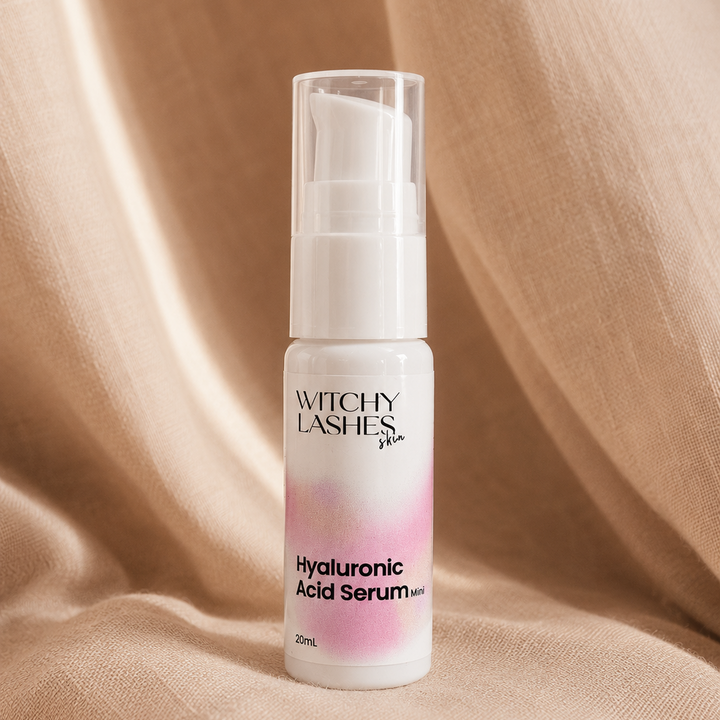
- Within sixty seconds, press a few drops of Hyaluronic Acid Serum on damp skin. Hyaluronic acid is a humectant that binds water in the upper layer of skin and has been shown to improve hydration in topical applications (Bukhari et al., 2023). The Witchy serum is a three-ingredient formula with no actives, fragrance or essential oils, which makes it a gentle fit for recovering skin.
- Wait about thirty seconds.
- Press in two to three drops of Blue Tansy Calming Facial Oil over the top, if your clinician is comfortable with botanical oils in your aftercare window. The oil contains chamazulene, a compound with documented antioxidant effects in laboratory studies (Slon et al., 2024). If your clinician prefers a fragrance-free unscented moisturiser as the seal, use that instead.
- Apply mineral sunscreen as your final step. Post-treatment skin is more vulnerable to UV. Mineral filters are gentler than chemical filters in the recovery window.
Evening
- Cleanse gently.
- Pat damp.
- Serum within sixty seconds.
- Wait thirty seconds.
- Two to three drops of facial oil over the top, or a fragrance-free moisturiser if your therapist prefers.
That is the whole routine. Run it for one to two weeks after a gentle treatment, longer if your clinician advises. If you would like both products together, the Renewal Ritual brings them into one pairing.
What to definitely not do
Do not pick or peel flaking skin. If your treatment has caused peeling, let it shed naturally. Picking pulls off skin that is not ready to release, which can cause scarring, pigmentation changes and prolonged healing.
Do not return to active ingredients early. This is one of the biggest causes of post-treatment problems. Even if your skin looks fine on day three, the barrier is still recovering. Retinol, vitamin C, acids and exfoliants all need to wait until your clinician clears them.
Do not skip sunscreen. Post-treatment skin is significantly more vulnerable to UV. Pigmentation changes from sun exposure in the recovery window can take months to fade. Sunscreen daily, reapplied every two hours when outdoors.
Do not exfoliate, in any form. No scrubs, no acid toners, no enzyme masks, no cleansing brushes. Your skin is doing its own renewal. Adding more disruption slows it down.
Do not heat the skin unnecessarily. Hot showers, saunas, steam rooms, hot yoga and direct sun exposure can prolong redness and inflammation. Cool environments support recovery.
Do not start a new product during recovery. Now is not the time to test anything new. Stick with products your skin already tolerates well.
When to call your clinician
Some recovery is normal. Some is not. Normal: redness for one to seven days depending on treatment; mild swelling on days one to two; tightness and dryness; flaking and peeling during the renewal phase; some sensitivity to products you usually tolerate. Call your clinician right away if you have: severe pain that does not respond to paracetamol; swelling that worsens after day two or three rather than improving; signs of infection (increasing redness, warmth, pus, fever); blistering that was not expected; skin that has gone significantly darker or lighter in patches; or any reaction that feels wrong, even if you cannot describe it precisely.
Your treating clinician is the right person to call for any of these. Not a skincare brand, and not a guess from the internet. healthdirect.gov.au has after-hours health support if you cannot reach your clinic.
A note from Marcha
I do not perform facials, peels, microneedling or laser. I am not a dermal therapist, an aesthetician or a dermatologist. I am someone who has had her share of facials and recovery windows over the years, and who has watched friends and customers move through far more involved treatments.
What I have learned, from my own face and from years of correspondence, is that the women who get the best results from treatments are almost always the women who follow their clinician's aftercare instructions to the letter. Not the women with the most expensive products. Not the women with the longest routines. The women who do exactly what their therapist tells them to do.
Skincare is the support. Your clinician's protocol is the guide. If you are between treatments and looking for a gentle, calm routine that supports your skin without interfering with whatever else you are doing, the two-step routine I describe in this article is the simplest version I trust on my own face after a facial.
But if your therapist tells you to use something else, use what they tell you. They are looking at your skin. I am writing for everyone.
Marcha, Founder of Witchy Lashes Skin
Common questions
When can I wash my face after a facial?
For most gentle facials, six to twelve hours, or as your therapist instructs. For peels and laser treatments, the timeline varies. Follow your specific aftercare instructions.
How long should I wait to use my retinol after a peel?
For light peels, usually one week. For medium peels, two to four weeks. For deeper peels, longer. Your clinician will give you the right timeline for your specific treatment. Reintroducing retinol too early is one of the most common ways to undo peel results.
Can I use hyaluronic acid right after microneedling?
Most clinicians are comfortable with hyaluronic acid in the recovery window because it is a humectant and is well tolerated by post-treatment skin. Confirm with the clinician who did your treatment. Apply on slightly damp skin within sixty seconds of cleansing. Avoid hyaluronic acid serums that contain other actives or fragrance.
Is it safe to use a facial oil after microneedling?
Most clinicians prefer that you wait at least forty-eight to seventy-two hours after microneedling before applying any oils, as the tiny channels in the skin are still closing. Follow your clinician's specific guidance. Once they have cleared you, a simple botanical facial oil over a humectant serum is a gentle aftercare option.
Should I wear makeup after a treatment?
Generally not for at least twenty-four to forty-eight hours after most treatments, longer after peels and laser. Your clinician will give you a specific timeline. When you do return to makeup, choose mineral-based products and apply them over a calming skincare base.
Why does my skin look worse a few days after my treatment?
Many treatments have a peeling phase that looks worse before it looks better. This is usually normal and part of the treatment working as designed. Resist the urge to intervene. Trust the timeline your clinician gave you. If something genuinely feels wrong (pain, infection signs, prolonged swelling), call them.
Can I exercise after a facial or peel?
Most clinicians ask you to avoid intense exercise for twenty-four to forty-eight hours after a facial, and longer after peels. Heat and sweat in the recovery window can prolong redness, irritate freshly treated skin, and increase the risk of post-treatment breakouts.
The simple pairing
The Renewal Ritual
The hyaluronic acid serum and the blue tansy facial oil, together. Water in, then sealed. The two-step routine that supports recovering skin without asking it to do more than it can.
-
 Hyaluronic Acid Serum
-
 Blue Tansy Calming Facial Oil
References
- Bukhari, S.N.A., Roswandi, N.L., Waqas, M., et al. (2023). Hyaluronic acid, a promising skin rejuvenating biomedicine: A review of recent updates and pre-clinical and clinical investigations. International Journal of Biological Macromolecules.
- Slon, K., et al. (2024). Chamazulene: antioxidant and anti-inflammatory properties in laboratory studies. Journal of Natural Products Research.

