

Over-Exfoliated Skin: The Gentle Reset That Actually Works
Over-exfoliated skin is skin that has been asked to do too much. Acids, retinol, scrubs, peel pads, exfoliating cleansers, tools, masks, sometimes all in the same week. Each step may seem reasonable on its own, but together they can leave the skin feeling tight, shiny, stingy and reactive to products that used to feel completely fine.
The answer is not another active. It is a pause. For two to four weeks, over-exfoliated skin usually needs the simplest possible calming routine: gentle cleanser, hyaluronic acid serum on damp skin, a simple seal over the top, and sunscreen in the morning. Nothing tingly. Nothing polishing. Nothing that asks the skin to hurry. If your skin has not calmed after four weeks, or if it is burning, weeping, cracking or visibly worsening, please see a GP.
What over-exfoliated skin actually looks like
Most women recognise over-exfoliated skin once they see the pattern.
- Your skin feels tight, often within minutes of cleansing.
- It looks shinier than usual, but not in a healthy glow kind of way.
- Products sting or burn, even ones you have used for years.
- Fine lines look sharper, especially around the eyes and forehead.
- Dry or flaky patches appear where they were not before.
- Sunscreen feels uncomfortable.
- Makeup clings instead of gliding.
- The skin feels almost too smooth in some areas, as if the top layer has been polished too thin.
If three or four of those sound familiar, your skin is probably asking you to stop. A quick note: over-exfoliation is not the same as a medical skin condition, an allergy, or a reaction to a specific ingredient. The clue is timing. If your skin was fine a few months ago and you have recently added retinol, vitamin C, acid toner, exfoliating cleanser, peel pads, or increased the frequency of any of them, over-exfoliation is a likely explanation. If you have not changed anything and your skin is still reactive, it is worth speaking with a GP.
How it happens, usually gradually
Over-exfoliation rarely happens in one obvious moment. It builds.
A new vitamin C serum because someone said everyone should use one. An exfoliating cleanser because your old one felt boring. A retinol because you are approaching forty. An AHA toner every second night. A scrub "just once a week". A microfibre cloth used a little too firmly. Each thing feels gentle enough by itself. Stacked together, it can become more than your skin can comfortably recover from overnight.
This is one of the most common reasons skin seems to become reactive "out of nowhere." It is rarely nowhere. It is usually a slow accumulation that finally crosses a line. The good news is that pulling back works in the same quiet way. Less, consistently, gives your skin room to catch up.
What to stop, and for how long
Pause immediately, for two to four weeks:
- All chemical exfoliants: AHAs like glycolic, lactic, mandelic and malic acid; BHAs like salicylic acid; and PHAs.
- All physical exfoliants: scrubs, face brushes, exfoliating towels and microfibre cloths used vigorously.
- All retinoids: retinol, retinal, retinyl palmitate and prescription tretinoin. If a doctor prescribed your retinoid, speak with them before stopping.
- Strong vitamin C serums, especially L-ascorbic acid at 10% or higher.
- Enzyme masks and exfoliating peel pads.
- Clay masks and detox-style treatments.
- Any cleanser that leaves your skin feeling squeaky.
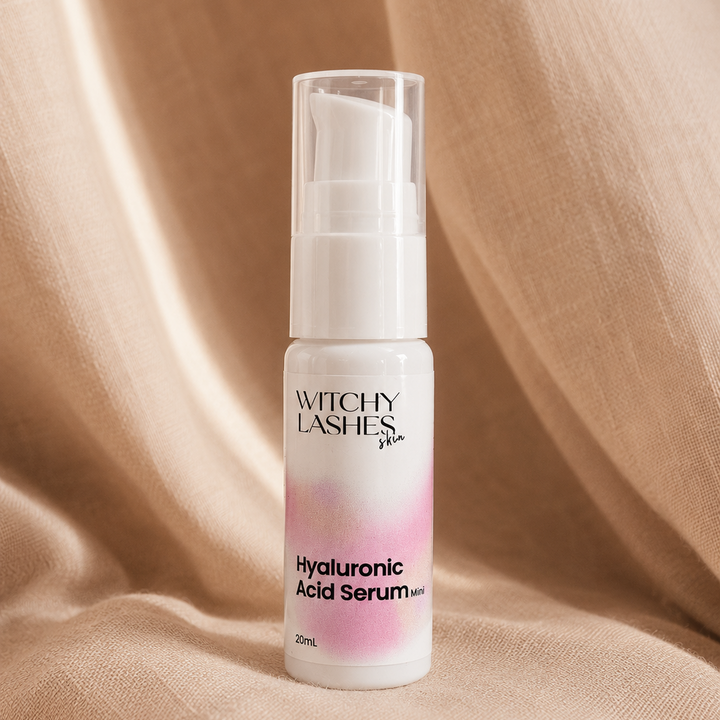
A gentle starting point while your skin settles: Hyaluronic Acid Serum on damp skin gives your barrier water to work with, without asking it to tolerate any actives. It is a three-ingredient formula with no fragrance, no essential oils, no fillers.
Always keep: sunscreen. This is non-negotiable. Mineral sunscreens with zinc oxide or titanium dioxide are often gentler for reactive skin than chemical sunscreens. For mild over-exfoliation, two weeks may be enough. For more reactive skin, four weeks is more realistic.
The gentle reset routine
Morning
- Rinse your face with cool to lukewarm water, or use a gentle cream-based or oil-based cleanser. No foaming, no scrubbing, no cloths.
- Pat your skin damp with a soft towel. Not dripping. Not bone dry.
- Within sixty seconds, press in a few drops of Hyaluronic Acid Serum on damp skin. Hyaluronic acid is a humectant that has been shown to bind water in the upper layer of skin and improve hydration in topical applications (Bukhari et al., 2023).
- Wait about thirty seconds.
- Press in two to three drops of Blue Tansy Calming Facial Oil over the top. The oil is rich in chamazulene, a compound with documented anti-inflammatory and antioxidant properties in laboratory studies (Slon et al., 2024).
- Apply mineral sunscreen as your final step.
Evening: Cleanse gently. Pat damp. Hyaluronic acid serum within sixty seconds. Wait thirty seconds. Three to four drops of facial oil.
That is the whole routine. The most important thing is that nothing else is layered in for at least two weeks. If you would like both products in one pairing, the Renewal Ritual brings them together.
Hyaluronic acid has been shown to improve skin hydration and support the function of the stratum corneum when applied as part of a properly formulated routine.Bukhari et al., International Journal of Biological Macromolecules, 2023
What you should be seeing, week by week
Days one to three. Your skin may still feel tight and reactive. It can feel like nothing is happening. Do not add anything.
Days four to seven. Stinging often settles first. By the end of the first week, you should be able to apply your serum and oil without discomfort. Tightness may still be there.
Days seven to fourteen. Tightness should begin easing noticeably. Flaking starts to settle. Redness may look less obvious. Your skin starts to feel like skin again, not like a thin membrane stretched over your face.
Days fourteen to twenty-eight. The shiny, surface-too-close feeling should reduce. Skin looks calmer. Makeup sits better. Sunscreen feels more comfortable.
The bigger pattern matters more than a single morning. Some days will feel worse than the day before. Look at week-over-week, not hour-by-hour.

Blue Tansy Calming Facial Oil
Rich in chamazulene, with documented anti-inflammatory effects in laboratory studies. A calm botanical seal for skin that needs a quieter evening.
Read the formulaReintroducing actives when your skin is ready
Once your skin has been calm for at least a week, you can begin to reintroduce active ingredients. Slowly.
Start with the gentlest: niacinamide or a low-percentage azelaic acid is usually a softer reintroduction than retinol or strong vitamin C. One product, one frequency, for two weeks. Use the new active twice a week, in the evening only. Watch your skin. If it stays calm, move to three times a week, then four, over the next month. Wait two weeks before adding a second active. You need to know what each product is doing before you stack another one on top.
Do not bring everything back. Most over-exfoliation stories start with a routine that was simply doing too much. One or two actives, used moderately, is enough for most adult skin. If a reintroduced product brings back the tight, stingy feeling, that ingredient or frequency may not be right for your skin in this season.
When the reset is not enough
If your skin is not calming after four weeks of a stripped-back routine, the cause is probably not over-exfoliation alone. A few possibilities: a specific ingredient sensitivity or allergy; perioral dermatitis (small raised bumps around the mouth, nose or eyes that need medical treatment); rosacea-like sensitivity (persistent redness, visible blood vessels, flushing); eczema (itchy patches that worsen); or contact dermatitis (allergic response to a new fragrance, soap or preservative).
If your skin has not visibly calmed after four weeks of a stripped-back routine, please see a GP. healthdirect.gov.au has plain-English guides on rosacea, eczema, perioral dermatitis and contact dermatitis, plus a registered nurse you can call any time of day. A calming routine is not a substitute for a proper diagnosis when something bigger is happening.

I have done this to my own face. Before I started making skincare, I was in the same pattern so many women end up in: an acid toner because I wanted smoother texture, a retinol because I was approaching forty, a vitamin C serum because everyone seemed to be using one, an enzyme mask because it sounded gentle, a different cleanser because the old foaming one suddenly felt like it had stopped working.
It had not stopped working. My skin was just drowning under everything I was asking it to tolerate. The night I finally pulled everything back and used almost nothing, just water, a tiny bit of jojoba oil from my kitchen, and sleep, was the night my skin started to feel like mine again. It took about two weeks of doing very little before my face felt calm. Two products. Two steps. Almost nothing else. Less is the fix.
Marcha, founder of Witchy Lashes Skin
Common questions
How long does it take for over-exfoliated skin to heal?
For most women, two to four weeks on a stripped-back routine is enough to settle the tight, reactive feeling. Mild over-exfoliation may settle in seven to ten days. More severe over-exfoliation, especially when the skin has been pushed for months, can take six to eight weeks. If your skin is not visibly calmer after four weeks, see a GP to rule out an underlying condition.
Can I use hyaluronic acid on over-exfoliated skin?
Yes. Hyaluronic acid is a humectant, not an exfoliant, and is well tolerated by most reactive skin. The Witchy serum is a three-ingredient formula with no actives, fragrance or essential oils, which makes it a quieter choice for skin that has been reacting to other products. Apply it to damp skin within sixty seconds of cleansing, then seal with a gentle facial oil or simple cream over the top.
Should I stop using sunscreen if my skin is over-exfoliated?
No. Sunscreen is more important, not less. Over-exfoliated skin is more vulnerable to UV, so protect it every morning. If your usual sunscreen stings, consider switching to a mineral sunscreen with zinc oxide or titanium dioxide, and apply it over your serum and oil routine.
What if I have already done damage with retinol?
Pause the retinol immediately. Use the gentle reset routine for at least three to four weeks before considering whether to bring it back. When you do, start once or twice a week, evening only, and watch carefully. Many women find the retinol that suited them in one season no longer suits them in another, especially through perimenopause.
Can I still wear makeup while my skin is recovering?
Yes, but go lighter where you can. Tinted sunscreen, sheer foundation or just concealer will usually sit better than a full-coverage base. Apply makeup over a still-soft serum-and-oil layer so it has something smooth to grip onto. Avoid powders if they exaggerate the texture.
Will my skin ever go back to how it was before?
For most over-exfoliated skin, yes. Skin renews constantly, and with gentle support it usually returns to normal function within four to six weeks. The version that comes back may still need a quieter routine than before. Skin changes with age, hormones and climate. Aim for the calmer routine that suits your skin now, not the more aggressive one that pushed it too far.
The Renewal Ritual
Hyaluronic Acid Serum on damp skin. Blue Tansy Calming Facial Oil to seal. The two steps the reset is built on, in one pairing.


Related reading
References
- Bukhari, S. N. A., et al. (2023). Hyaluronic acid, a promising skin rejuvenating biomedicine: A review of recent updates and pre-clinical and clinical investigations on cosmetic and nutricosmetic effects. International Journal of Biological Macromolecules.
- Slon, K., Szumny, A., Nawrot-Hadzik, I., & Hadzik, J. (2024). Azulene and its derivatives as potential compounds in the therapy of dermatological and anticancer diseases. Molecules, 29(9), 2028. PMID: 38731510.

