

Wind, Sun and Chlorine: Calming the Look of Redness After an Australian Summer Day
A day outdoors in an Australian summer is a lot for skin. Strong UV. Heat. Wind. Salt water. Pool chlorine. Sweat. Sunscreen. Then the sudden switch into cold, dry air-conditioning. By the end of the day, your face can feel tight, warm, slightly raw, and look red even in places that did not obviously catch the sun.
The job of your evening routine after a day like that is not to do more. It is to calmly replace what your skin has lost. A cool, gentle cleanse. Hyaluronic acid serum on slightly damp skin. A botanical seal over the top. Serum first. Blue tansy facial oil second. Sleep. No actives. No exfoliation. If your skin is genuinely sunburnt, blistered, painful or peeling, this is not the routine you need. Sunburn is a medical issue. Please speak with a pharmacist or GP.
What an Australian summer day actually does to skin
UV. Australian UV is among the strongest in the world. Even with sunscreen, even when you reapply, some UV can still reach the skin. UV exposure can trigger redness, heat and slight puffiness as the skin responds to the day.
Heat. When the temperature rises, blood vessels in the skin dilate to help your body cool down. That is normal, but it can leave your face looking redder and feeling warmer for hours afterwards.
Wind. Wind dries the surface faster than still air. A windy beach day can leave your skin more dehydrated than you expect, even if you spent half the day in the water.
Salt water. Sea water is hypertonic, meaning it has a higher salt concentration than your skin. When it dries on your face, it can pull water out of the upper layer and leave the surface feeling tight. The first step after a day like this is replacing that water: Hyaluronic Acid Serum on damp skin does exactly that.
Chlorine. Pool chlorine can disrupt the skin's natural lipid layer, the oils that help hold water in. After time in a chlorinated pool, skin can lose water faster for the rest of the day.
Indoor air-conditioning. Coming inside after heat feels lovely, but air-conditioning lowers humidity. The cooler indoor air can keep pulling water from your skin long after you have left the sun.
Any one of these is manageable. Together, they can leave skin looking like it worked much harder than you did.
The look of redness versus actual sunburn
These are not the same thing, and the difference matters.
The look of redness after a long day outdoors: a soft, diffuse pink flush across the cheeks, forehead or nose; skin feels warm but not painfully hot; no blistering, no peeling, no clear missed-sunscreen line; it starts settling within twelve to twenty-four hours; it responds well to a gentle evening routine, water and sleep.
Sunburn: clear red areas, often where sunscreen missed; skin feels hot, painful, tight or throbbing; blistering, peeling or fluid-filled bumps may appear within a day or two; it may come with chills, headache, nausea or dizziness; it does not settle quickly.
If your skin is genuinely sunburnt, follow medical guidance from healthdirect.gov.au/sunburn or speak with a pharmacist. The routine below is for the look of redness after a big outdoor day, not for actual sunburn.
Skin misted with a hydrating product and left unsealed lost thirty-seven per cent more water within fifteen minutes than skin sealed straight afterwards.Experimental Dermatology, 2023
The evening reset
Step one: cool down first. Splash your face with cool water several times before you cleanse. Not icy cold. Not hot. Just cool. This helps remove salt, chlorine, sweat and sunscreen residue while letting the skin start to settle.
Step two: gentle cleanse. Use a cream-based or oil-based cleanser to remove the day. Skip foaming cleansers tonight. Use cool to lukewarm water.
Step three: pat damp. Leave the skin slightly damp, not dry.
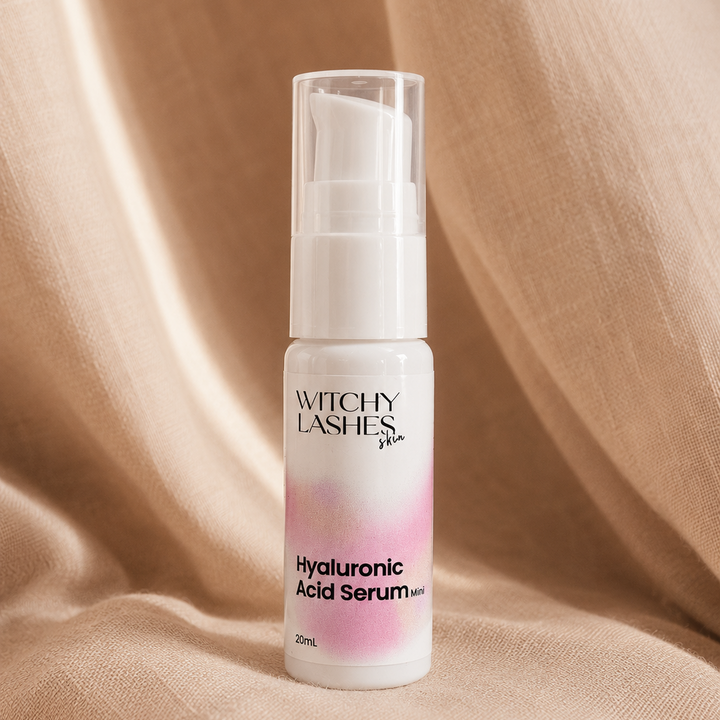
Step four: hyaluronic acid serum. Within sixty seconds, press in a few drops of Hyaluronic Acid Serum on damp skin. The day has taken water from the surface. Hyaluronic acid is a humectant that binds water in the upper layer of skin and has been shown to improve hydration in topical applications (Bukhari et al., 2023).
Step five: wait thirty seconds.
Step six: blue tansy facial oil. Press in three to four drops of Blue Tansy Calming Facial Oil. The oil helps slow the water you have just added from leaving overnight. Blue tansy is rich in chamazulene, a compound with documented anti-inflammatory and antioxidant effects in laboratory studies (Slon et al., 2024), and has long been used in calming-feeling skincare for skin that feels hot, flushed or unsettled.
Step seven: hydrate from the inside too. Have a large glass of water before bed. You have lost more fluid through sweat and evaporation than you may realise.
No retinol. No acids. No exfoliation. No strong vitamin C. Your skin has already had a busy day. Let tonight be simple.

Blue Tansy Calming Facial Oil
Rich in chamazulene, with documented anti-inflammatory effects in laboratory studies. The calming botanical seal for skin that has worked hard all day.
Read the formulaWhat to keep doing for the next forty-eight hours
Use sunscreen generously. Skin can be more sensitive after a heavy exposure day. Mineral sunscreen with zinc oxide or titanium dioxide often feels gentler than chemical sunscreen on reactive skin.
Hold the actives. Retinol, acids, strong vitamin C and exfoliating treatments can wait at least forty-eight hours. Your skin is in recovery mode. Do not ask it to do two jobs at once.
Keep the calming routine. Serum then oil, morning and evening, for at least two days. Some skin needs a full week to feel like itself again.
Sleep. Skin does much of its repair work overnight. A short night after a beach day is often when redness lingers longest.
Keep showers lukewarm. Hot showers, saunas, hot yoga and hot baths can re-dilate blood vessels and keep the flushed look going.
Drink water. More than usual. Topical hydration helps the surface, but your whole body has been dealing with heat too.
When climate redness is something else
Most redness after a hot, windy day outdoors is a routine question. It settles with a gentle evening, sleep and a little patience. Sometimes redness is something else. See a GP rather than relying on skincare alone if: redness is concentrated in distinct patches, especially around the cheeks and nose, and does not settle within a few days; you flush repeatedly after heat, wine, spicy food, exercise or stress (this can be a sign of rosacea); you notice visible blood vessels on the cheeks or nose; you have small raised bumps around the mouth, nose or eyes (this can be perioral dermatitis); or your skin has been getting more reactive over months, regardless of the weather.
healthdirect.gov.au and the Australasian College of Dermatologists A to Z of Skin are good Australian resources. A GP can also refer you to a dermatologist if needed. Persistent redness or flushing patterns that do not settle are worth a proper look.

We live in Sydney, so summer weekends are usually a mix of beach, pool, sunscreen, snacks, sand, and that bright Australian light that makes skin earn its keep. By Sunday evening, I can often feel my face before I see it properly. The slight tightness across my cheeks. The fine lines around my eyes looking sharper. The pinkish flush that does not fully leave until I have stopped moving, stopped sweating, and spent an hour doing very little.
On those nights, I do not reach for anything clever. A cool splash. A gentle cleanse. The serum. The oil. A big glass of water. Bed earlier than I would normally manage. I am not going to pretend two products undo an Australian summer day. They do not. Your skin does most of that work itself overnight, if you stop adding extra stress. That is what the routine is for. The Renewal Ritual brings both steps together in one pairing.
Marcha, founder of Witchy Lashes Skin
Common questions
Why does my face look red after a beach day even with sunscreen?
Usually because several things happened at once: some UV exposure despite sunscreen, heat-related blood vessel dilation, water loss from wind and salt, and the shift between hot outdoor air and cool indoor air. The redness is often a response to the day's total load, not always sunburn. It usually settles within twelve to twenty-four hours with a gentle evening routine.
How long does post-sun redness take to settle?
For most skin, twelve to twenty-four hours. Heavier sun exposure can take two to three days. If your skin is still flushed after three days, or if there is pain, peeling, blistering or swelling, speak with a GP or pharmacist.
Can I use hyaluronic acid on red, hot skin?
Yes, if the skin is not burnt or broken. Hyaluronic acid is a humectant and is generally well tolerated by reactive-feeling skin. Apply it to slightly damp skin and seal with a facial oil or simple cream over the top. The damp surface and the seal both matter.
Is it OK to use facial oil after sun exposure?
Yes, for the look of redness after a hot day outdoors. Blue tansy oil contains chamazulene, a compound with documented anti-inflammatory effects in laboratory studies, and has long been used in calming-feeling skincare. If your skin is genuinely sunburnt, blistered, painful or peeling, hold the oil and follow medical guidance for burn care first.
Should I exfoliate red skin to remove the flaky bits?
No. Do not exfoliate skin that is red, reactive, hot or peeling from sun exposure. Exfoliation makes a stressed surface more stressed. Let the skin shed naturally and support it with hydration, a gentle seal and sunscreen.
Why does my skin feel tight after swimming in a pool?
Pool chlorine can disrupt the natural lipid layer that helps hold water in your skin. After time in a chlorinated pool, your skin may lose water faster for the rest of the day. Rinse with fresh water when you get out, apply a humectant on damp skin within sixty seconds, and seal with a facial oil or moisturiser.
Can salt water be good for skin?
Some people find brief swims in clean salt water leave their skin feeling calmer, possibly because of trace minerals or the cooling effect. Prolonged salt water exposure is more often drying on the face, because salt can pull water from the upper layer of skin as it dries. Balance matters more than the idea that salt water is always good or always bad.
The Renewal Ritual
Hyaluronic Acid Serum on damp skin. Blue Tansy Calming Facial Oil to seal. The simple two-step routine for a skin that has had a long day.


Related reading
References
- Bukhari, S. N. A., et al. (2023). Hyaluronic acid, a promising skin rejuvenating biomedicine: A review of recent updates and pre-clinical and clinical investigations on cosmetic and nutricosmetic effects. International Journal of Biological Macromolecules.
- Slon, K., Szumny, A., Nawrot-Hadzik, I., & Hadzik, J. (2024). Azulene and its derivatives as potential compounds in the therapy of dermatological and anticancer diseases. Molecules, 29(9), 2028. PMID: 38731510.

